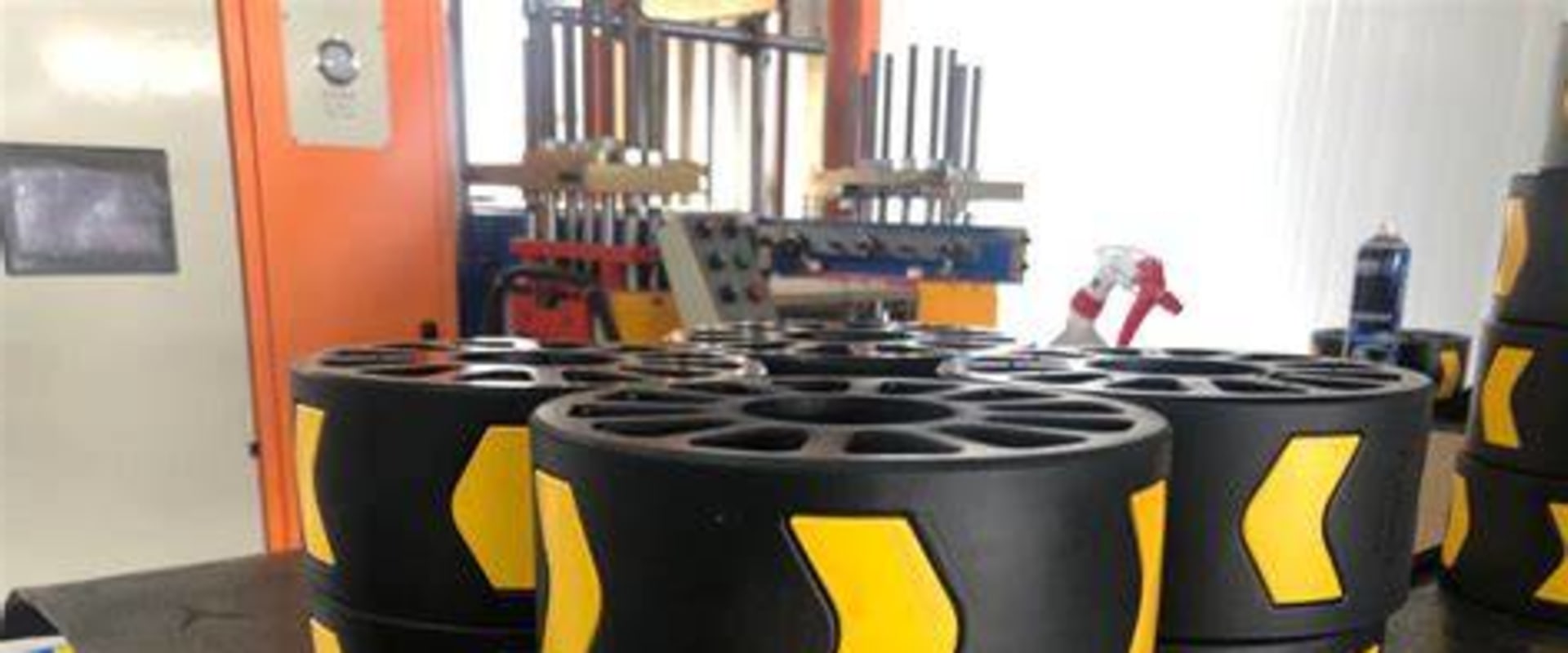

How Buyers Compare Rubber Bumper Options for Equipment Protection and Product Finish
When sourcing protective components for machinery, consumer goods, or industrial equipment, the selection process is rarely as straightforward as it looks. Buyers tasked with specifying the right protective accessories quickly discover that not all rubber bumpers are created equal. Material formulation, dimensional tolerances, mounting style, load-bearing capacity, and surface finish all play a role in whether a bumper protects effectively or fails prematurely. This guide walks through the key criteria professionals use when evaluating their options, so procurement teams, product designers, and equipment managers can make confident, well-informed decisions.
Why the Right Rubber Bumper Choice Matters More Than You Think
A bumper that looks adequate on a spec sheet may perform poorly in real-world conditions. Equipment that shifts, vibrates, or makes repeated contact with surfaces demands a bumper engineered to absorb energy reliably over thousands of cycles. Beyond pure function, the visual and tactile quality of a bumper contributes directly to the perceived value of finished products. Scratched cabinet doors, dented enclosures, and marred work surfaces are common consequences of using the wrong type of protective component — and those consequences translate into warranty claims, customer dissatisfaction, and rework costs.
This is why experienced buyers take a structured approach to comparison shopping rather than defaulting to the cheapest available option. Sourcing a high-quality rubber bumper from a reputable supplier is an investment in product longevity and brand reputation.
Key Criteria Buyers Use to Compare Rubber Bumper Options
1. Material Composition and Durometer
The base material of a rubber bumper determines its resilience, chemical resistance, and temperature range. Common materials include:
- Natural rubber: Excellent elasticity and impact absorption, but limited resistance to oils and UV exposure.
- EPDM (Ethylene Propylene Diene Monomer): Outstanding weathering, ozone, and UV resistance, ideal for outdoor applications.
- Neoprene: Good balance of oil resistance and flexibility, commonly used in industrial settings.
- Silicone: Handles extreme temperature ranges and maintains flexibility in cold environments.
- Thermoplastic rubber (TPR/TPE): Recyclable, consistent in manufacturing, and available in a wide range of finishes and colors.
Durometer — the hardness rating measured on the Shore A scale — is equally important. A Shore 30A bumper will compress easily under light loads and offer cushioning for delicate surfaces, while a Shore 70A bumper resists deformation under sustained pressure. Buyers should match durometer to the actual load conditions the bumper will experience in use.
2. Mounting Style and Installation Method
How a bumper attaches to a surface affects both ease of installation and long-term reliability. The most common mounting options include:
- Self-adhesive (PSA-backed): Quick to apply on smooth, clean surfaces — ideal for flat panels, cabinet bases, and electronics housings.
- Threaded stem or bolt-through: Provides a mechanical lock that holds up in high-vibration or high-load environments.
- Press-fit and snap-in: Designed for pre-punched holes; fast to install and easy to replace in production settings.
- Clip-on or channel-mount: Useful for edge protection along rails, frames, or conveyor components.
Buyers managing assembly lines care deeply about installation time per unit. Even a 10-second difference in application time adds up to significant labor costs over a high-volume production run. Mounting style also determines whether field replacement is practical without specialized tools.
3. Dimensional Precision and Consistency
Tight tolerances matter in applications where bumpers must fit pre-drilled holes, align with mating surfaces, or maintain a consistent stack height. Poor-quality bumpers often show visible variation in height, diameter, or surface flatness — small inconsistencies that create uneven contact, noise, and premature wear. Buyers sourcing for OEM applications should ask suppliers about production tolerances and request sample lots for inspection before committing to volume orders.
4. Load and Compression Characteristics
Compression force deflection (CFD) data tells buyers how much force is required to compress a bumper by a given percentage. This information is essential for applications where a specific level of resistance is needed — for example, a rubber foot under a heavy enclosure must support the load without bottoming out, while a door bumper in a consumer appliance should offer soft, quiet resistance without feeling stiff or springy.
Reputable manufacturers provide CFD curves in their product documentation. Buyers who skip this step often discover performance issues only after products reach end users.
5. Surface Finish, Color, and Aesthetic Consistency
For consumer-facing products, the visual quality of a rubber bumper is part of the product experience. A glossy or matte finish, uniform color matching, and a clean, burr-free edge all signal quality to the end user. Buyers for furniture, electronics, medical devices, and premium appliances frequently specify custom colors or surface textures to align with brand standards.
Even in purely industrial contexts, a clean-looking bumper installation reflects positively on build quality. Buyers should request physical samples and compare them under standard lighting conditions before approving a supplier.
Additional Factors That Influence Supplier Selection
Compliance and Certification
Depending on the industry, rubber bumpers may need to meet specific regulatory requirements. Food processing equipment requires FDA-compliant elastomers. Medical device manufacturers must source materials that meet USP Class VI or ISO 10993 standards. Electrical enclosures may require UL-listed components. Always verify certifications before qualifying a supplier for regulated applications.
Lead Time and Stock Availability
Custom bumper programs require tooling lead time, which can range from a few weeks to several months. Buyers working against tight production schedules often prefer suppliers that carry a broad catalog of standard sizes available from stock, allowing them to start production immediately while custom components are in development.
Volume Pricing and Minimum Order Quantities
Cost-per-unit varies significantly based on order volume, material cost, and whether the part is standard or custom. Buyers should evaluate total cost of ownership — factoring in installation time, replacement frequency, and warranty impact — rather than focusing exclusively on unit price.
Building a Reliable Comparison Process
A structured evaluation process helps buyers avoid the regret of qualifying an inadequate part. Consider the following steps:
- Define performance requirements (load, temperature range, chemical exposure, cycle life).
- Identify mounting constraints and installation process requirements.
- Request samples from at least two or three qualified suppliers.
- Run bench tests or simulate real-world conditions before final approval.
- Review supplier documentation for material data, tolerances, and certifications.
- Evaluate customer service responsiveness and technical support quality.
Final Thoughts
Comparing rubber bumper options is a multi-dimensional process that goes well beyond price. Material selection, dimensional quality, mounting design, load characteristics, and aesthetic finish all intersect to determine whether a bumper delivers real value in the field. Buyers who invest time in a thorough evaluation process consistently achieve better product performance, fewer field failures, and stronger customer satisfaction. Starting with a reliable, well-documented product catalog and partnering with a supplier that offers technical support gives procurement teams a solid foundation for making the right call every time.


